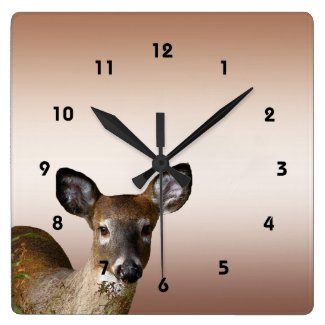
This decorative wall clock features a gentle brown white-tailed deer looking right out at you from his hiding place in the woods. His big ears are alert. The face has white markings around the eyes and nose. The image is set on a bronze gradient background. The numbers can be cleared if a simpler design is preferred.
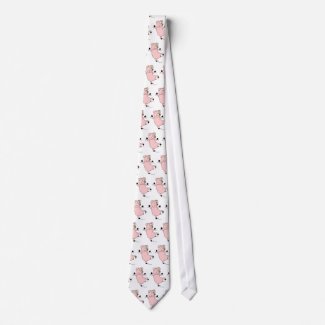
Here's an adorable, whimsical dancing pig tie.
This iPad sleeve features a sleeping cat & watching mice with red label.
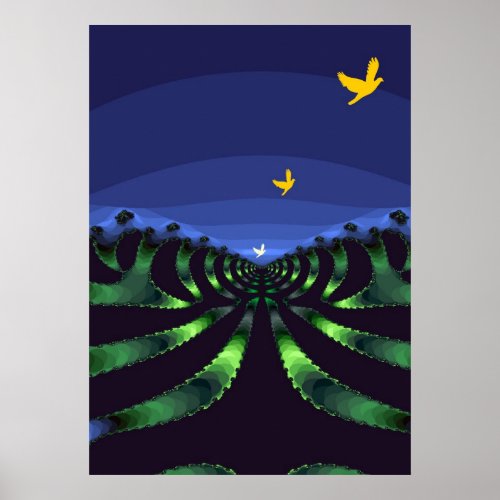
Out of the Void Poster by Bebops
I hope to display a variety of animal images on this blog to delight us all. I have created many products featuring wildlife and pets for my Zazzle stores, Bebop's Place and Bebop's Weddings, using my original photographs and designs. I am also constantly amazed at the gorgeous animal products available from the rest of the Zazzle community. I am hoping others will enjoy this blog and even be moved to purchase some of these lovely items for gifts or just for the pleasure of having such beauty around.
Thursday, June 28, 2012


Wednesday, June 27, 2012
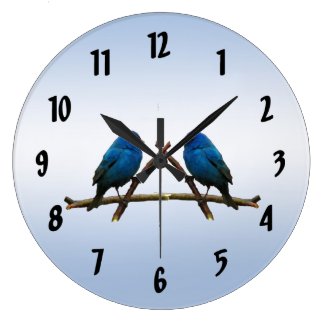
This wall clock features the spectacular male Indigo Bunting perched on a branch. This tiny bird is not often seen. He is shy and tends to avoid humans. His habitat is farmland, brush areas, and open woodlands. He has incredibly brilliant iridescent blue feathers and a very sweet song. Here two male buntings are set against a lovely pastel blue sky. The numbers can be cleared if a simpler design is preferred.
A cute photograph of a dolphin's head in blue-green clear water, with a flipper barely visible. Great for any dolphin enthusiast!
This messenger bag features a digital painting of the American bison, or buffalo. The background color is reminiscent of brain-tanned leather. The bison (Bison bison), the largest land mammal in North America, is considered a keystone species: they once roamed the continent in great herds, and their grazing pressure helped shape the ecology of the Great Plains. Two subspecies or ecotypes have been described: the plains bison (Bison bison bison), smaller in size and with a more rounded hump, and the wood bison (Bison bison athabascae) – the larger of the two and having a taller, square hump. The bison is a relative newcomer to North America, having originated in Eurasia and migrated over the Bering Strait About 10,000 years ago it replaced the steppe bison (Bison priscus), a previous immigrant that was much larger. It is thought that the steppe bison became extinct due to a changing ecosystem and hunting pressure following the development of the Clovis point and related technology, and improved hunting skills. During this same period, other megafauna vanished and were replaced to some degree by immigrant Eurasian animals that were better adapted to predatory humans. The extant bison, technically a dwarf form, was one of these animals. There were once an estimated 20-30 million bison, also referred to as buffalo, roaming North America. Their range once roughly comprised a triangle between the Great Bear Lake in Canada's far northwest, south to the Mexican states of Durango and Nuevo León, and east along the western boundary of the Appalachian Mountains. The first thoroughfares of North America, except for the time-obliterated paths of mastodon or musko, were the traces made by bison and deer in seasonal migration and between feeding grounds and salt licks. Many of these routes, hammered by countless hoofs instinctively following watersheds and the crests of ridges in avoidance of lower places' summer muck and winter snowdrifts, were followed by Native Americans and were invaluable to explorers.. The term "buffalo" may be considered a misnomer for this animal, as it is only distantly related to either of the two "true buffalo," the Asian water buffalo and the African buffalo. However, "bison" is a Greek word meaning ox-like animal, while "buffalo" originated with the French fur trappers who called these massive beasts bœufs, meaning ox or bullock – so both names, "bison" and "buffalo," have a similar meaning. In reference to this animal, the term "buffalo," which dates to 1635, has a much longer history than the term "bison," which was first recorded in 1774.The American bison is more closely related to the wisent or European bison. Unregulated shooting of bison, which culminated in mass slaughters during the 1870s, reduced the population to 1,091 in 1889.
Today, approximately 500,000 bison live across North America. Most are not pure bison but rather have been cross-bred with cattle in the past and are raised as livestock on ranches. Fewer than 30,000 bison are in conservation herds, and fewer than 5,000 are free-ranging and disease-free. Today bison are ecologically extinct throughout most of their historic range, except for a few national parks and other small wildlife areas. Yellowstone National Park has the largest population of free-roaming plains bison (about 4,000), and Wood Buffalo National Park has the largest population of free-roaming wood bison (about 10,000). A bison has a shaggy, long, dark brown winter coat, and a lighter weight, lighter brown summer coat. The winter coat is so thick and well insulated that snow can cover its backs without melting. Male bison are slightly larger than females. Plains bison typically weigh from 700 to 2,200 lbs. The heaviest wild bull ever recorded weighed 2,800 lbs. When raised in captivity and farmed for meat, the bison can grow unnaturally heavy and the largest semi-domestic bison weighed 3,800 lbs. The heads and forequarters are massive, and both sexes have short, curved horns that can grow up to 2 feet long, which they use in fighting for status within the herd and for defense. Bison are herbivores, grazing on the grasses and sedges of the North American prairies. Their daily schedule involves two-hour periods of grazing, resting and cud chewing, then moving to a new location to graze again. This regular motion ensures that bison seldom overgraze an area.
Bison often rub and roll on the ground creating shallow, saucer-like depressions called wallows. Bison roll in wallow, wet or dry, covering themselves with dust or mud. Past explanations and current hypotheses suggested for wallowing behavior include grooming behavior associated with shedding, male-male interaction (typically rutting behavior), social behavior for group cohesion, play behavior, relief from skin irritation due to biting insects; reduction of ticks and lice; and thermoregulation. Wallows were once a common feature of the plains. In winter, bison can dig through deep snow with their heads to reach the vegetation below. Bison have poor eyesight, but have acute hearing and an excellent sense of smell. Bison can reach speeds of up to 35 mph. Bison have a life expectancy of approximately 15 years in the wild and up to 25 years in captivity. Bison mate in late spring and summer in more open plain areas. During fall and winter, bison tend to gather in more wooded areas. During this time, bison partake in horning behaviors. They will rub their horns against trees, young saplings and even telephone poles. Aromatic trees like cedars and pine seem to be preferred. Horning appears to be associated with insect defense as it occurs most often in the fall when the insect population is at its highest. Cedar and pines emit an aroma after bison horn them and this seems to be used as a deterrent for insects. While often secure from predation due to their size and strength, in some areas, bison are regularly predated by wolves. Wolf predation typically peaks in late spring and early summer, with attacks usually being concentrated on cows and calves. Observations have shown that wolves more actively target herds with calves than those without. The length of a predation episode varies, ranging from a few minutes to over nine hours. Bison display five apparent defense strategies in protecting calves from wolves: running to a cow, running to a herd, running to the nearest bull, running in the front or center of a stampeding herd, and entering water bodies such as lakes or rivers. When fleeing wolves in open areas, cows with young calves take the lead, while bulls take to the rear of the herds, to guard the cows' escape. Bison typically ignore wolves not displaying hunting behavior. Wolf packs specializing in bison tend to have a greater number of males, as their superior size compared to the females allows them to wrestle their prey to the ground more effectively. The grizzly bear can also pose a threat to calves and sometimes adult bison, especially infirm specimens.
Bison were a keystone species, whose grazing pressure was a force that shaped the ecology of the Great Plains as strongly as periodic prairie fires and which were central to the lifestyle of Native Americans of the Great Plains. However, there is now some controversy over their interaction. "Hernando De Soto's expedition staggered through the Southeast for four years in the early 16th century and saw hordes of people but apparently did not see a single bison," Charles C. Mann wrote in 1491: New Revelations of the Americas Before Columbus. Mann discussed the evidence that Native Americans not only created (by selective use of fire) the large grasslands that provided the bison's ideal habitat but also kept the bison population regulated. In this theory, it was only when the original human population was devastated by wave after wave of epidemic (from diseases of Europeans) after the 16th century that the bison herds propagated wildly. In such a view, the seas of bison herds that stretched to the horizon were a symptom of an ecology out of balance, only rendered possible by decades of heavier-than-average rainfall. Other evidence of the arrival circa 1550–1600 AD in the savannas of the eastern seaboard includes the lack of places which southeast natives named after buffalo. Bison were the most numerous single species of large wild mammal on Earth. What is not disputed is that before the introduction of horses, bison were herded into large chutes made of rocks and willow branches and then stampeded over cliffs. These buffalo jumps are found in several places in the U.S. and Canada, such as Head-Smashed-In Buffalo Jump. Large groups of people would herd the bison for several miles, forcing them into a stampede that would ultimately drive many animals over a cliff. The large quantities of meat obtained in this way provided the hunters with surplus, which was used in trade. Later, when Plains Indians obtained horses, it was found that a good horseman could easily lance or shoot enough bison to keep his tribe and family fed, as long as a herd was nearby. The bison provided meat, leather, sinew for bows, grease, dried dung for fires, and even the hooves could be boiled for glue. When times were bad, bison were consumed down to the last bit of marrow. The only continuously wild bison herd in the United States resides within Yellowstone National Park.[23] Numbering between 3,000 and 3,500, the Yellowstone Park Bison Herd is descended from a remnant population of 23 individual 'mountain' bison that survived the mass slaughter of the 19th century by hiding out in the Pelican Valley of Yellowstone Park. In 1902, a captive herd of 21 plains bison was introduced to the Lamar Valley and managed as livestock until the 1960s, when a policy of natural regulation was adopted by the park. The end of the ranching era and the onset of the natural regulation era set into motion a chain of events that have led to the bison of the Yellowstone Park Bison Herd migrating to lower elevations outside the park in search of winter forage. The presence of wild bison in Montana is perceived as a threat to many cattle ranchers, who fear that the small percentage of bison that carry brucellosis will infect livestock and cause cows to abort their first calves. However, there has never been a documented case of brucellosis being transmitted to cattle from wild bison.
The management controversy that began in the early 1980s continues to this day, with advocacy groups arguing that the Yellowstone Park Bison Herd should be protected as a distinct population segment under the Endangered Species Act. Bison are now raised for meat and hides. The majority of bison in the world are being raised for human consumption. Bison meat is lower in fat and cholesterol than beef,a fact which has led to the development of beefalo, a fertile crossbreed of bison and domestic cattle. In 2005, about 35,000 bison were processed for meat in the U.S., with the National Bison Association and USDA providing a "Certified American Buffalo" program with birth-to-consumer tracking of bison via RFID ear tags. There is even a market for kosher bison meat; these bison are slaughtered at one of the few kosher mammal slaughterhouses in the U.S., and the meat is then distributed nationwide. A proposal known as Buffalo Commons has been suggested by a handful of academics and policymakers to restore large parts of the drier portion of the Great Plains to native prairie grazed by bison. Proponents argue that current agricultural use of the shortgrass prairie is not sustainable, pointing to periodic disasters, including the Dust Bowl, and continuing significant human population loss over the last 60 years. However, this plan is opposed by some who live in the areas in question.
A cute photograph of a dolphin's head in blue-green clear water, with a flipper barely visible. Great for any dolphin enthusiast!

This messenger bag features a digital painting of the American bison, or buffalo. The background color is reminiscent of brain-tanned leather. The bison (Bison bison), the largest land mammal in North America, is considered a keystone species: they once roamed the continent in great herds, and their grazing pressure helped shape the ecology of the Great Plains. Two subspecies or ecotypes have been described: the plains bison (Bison bison bison), smaller in size and with a more rounded hump, and the wood bison (Bison bison athabascae) – the larger of the two and having a taller, square hump. The bison is a relative newcomer to North America, having originated in Eurasia and migrated over the Bering Strait About 10,000 years ago it replaced the steppe bison (Bison priscus), a previous immigrant that was much larger. It is thought that the steppe bison became extinct due to a changing ecosystem and hunting pressure following the development of the Clovis point and related technology, and improved hunting skills. During this same period, other megafauna vanished and were replaced to some degree by immigrant Eurasian animals that were better adapted to predatory humans. The extant bison, technically a dwarf form, was one of these animals. There were once an estimated 20-30 million bison, also referred to as buffalo, roaming North America. Their range once roughly comprised a triangle between the Great Bear Lake in Canada's far northwest, south to the Mexican states of Durango and Nuevo León, and east along the western boundary of the Appalachian Mountains. The first thoroughfares of North America, except for the time-obliterated paths of mastodon or musko, were the traces made by bison and deer in seasonal migration and between feeding grounds and salt licks. Many of these routes, hammered by countless hoofs instinctively following watersheds and the crests of ridges in avoidance of lower places' summer muck and winter snowdrifts, were followed by Native Americans and were invaluable to explorers.. The term "buffalo" may be considered a misnomer for this animal, as it is only distantly related to either of the two "true buffalo," the Asian water buffalo and the African buffalo. However, "bison" is a Greek word meaning ox-like animal, while "buffalo" originated with the French fur trappers who called these massive beasts bœufs, meaning ox or bullock – so both names, "bison" and "buffalo," have a similar meaning. In reference to this animal, the term "buffalo," which dates to 1635, has a much longer history than the term "bison," which was first recorded in 1774.The American bison is more closely related to the wisent or European bison. Unregulated shooting of bison, which culminated in mass slaughters during the 1870s, reduced the population to 1,091 in 1889.
Today, approximately 500,000 bison live across North America. Most are not pure bison but rather have been cross-bred with cattle in the past and are raised as livestock on ranches. Fewer than 30,000 bison are in conservation herds, and fewer than 5,000 are free-ranging and disease-free. Today bison are ecologically extinct throughout most of their historic range, except for a few national parks and other small wildlife areas. Yellowstone National Park has the largest population of free-roaming plains bison (about 4,000), and Wood Buffalo National Park has the largest population of free-roaming wood bison (about 10,000). A bison has a shaggy, long, dark brown winter coat, and a lighter weight, lighter brown summer coat. The winter coat is so thick and well insulated that snow can cover its backs without melting. Male bison are slightly larger than females. Plains bison typically weigh from 700 to 2,200 lbs. The heaviest wild bull ever recorded weighed 2,800 lbs. When raised in captivity and farmed for meat, the bison can grow unnaturally heavy and the largest semi-domestic bison weighed 3,800 lbs. The heads and forequarters are massive, and both sexes have short, curved horns that can grow up to 2 feet long, which they use in fighting for status within the herd and for defense. Bison are herbivores, grazing on the grasses and sedges of the North American prairies. Their daily schedule involves two-hour periods of grazing, resting and cud chewing, then moving to a new location to graze again. This regular motion ensures that bison seldom overgraze an area.
Bison often rub and roll on the ground creating shallow, saucer-like depressions called wallows. Bison roll in wallow, wet or dry, covering themselves with dust or mud. Past explanations and current hypotheses suggested for wallowing behavior include grooming behavior associated with shedding, male-male interaction (typically rutting behavior), social behavior for group cohesion, play behavior, relief from skin irritation due to biting insects; reduction of ticks and lice; and thermoregulation. Wallows were once a common feature of the plains. In winter, bison can dig through deep snow with their heads to reach the vegetation below. Bison have poor eyesight, but have acute hearing and an excellent sense of smell. Bison can reach speeds of up to 35 mph. Bison have a life expectancy of approximately 15 years in the wild and up to 25 years in captivity. Bison mate in late spring and summer in more open plain areas. During fall and winter, bison tend to gather in more wooded areas. During this time, bison partake in horning behaviors. They will rub their horns against trees, young saplings and even telephone poles. Aromatic trees like cedars and pine seem to be preferred. Horning appears to be associated with insect defense as it occurs most often in the fall when the insect population is at its highest. Cedar and pines emit an aroma after bison horn them and this seems to be used as a deterrent for insects. While often secure from predation due to their size and strength, in some areas, bison are regularly predated by wolves. Wolf predation typically peaks in late spring and early summer, with attacks usually being concentrated on cows and calves. Observations have shown that wolves more actively target herds with calves than those without. The length of a predation episode varies, ranging from a few minutes to over nine hours. Bison display five apparent defense strategies in protecting calves from wolves: running to a cow, running to a herd, running to the nearest bull, running in the front or center of a stampeding herd, and entering water bodies such as lakes or rivers. When fleeing wolves in open areas, cows with young calves take the lead, while bulls take to the rear of the herds, to guard the cows' escape. Bison typically ignore wolves not displaying hunting behavior. Wolf packs specializing in bison tend to have a greater number of males, as their superior size compared to the females allows them to wrestle their prey to the ground more effectively. The grizzly bear can also pose a threat to calves and sometimes adult bison, especially infirm specimens.
Bison were a keystone species, whose grazing pressure was a force that shaped the ecology of the Great Plains as strongly as periodic prairie fires and which were central to the lifestyle of Native Americans of the Great Plains. However, there is now some controversy over their interaction. "Hernando De Soto's expedition staggered through the Southeast for four years in the early 16th century and saw hordes of people but apparently did not see a single bison," Charles C. Mann wrote in 1491: New Revelations of the Americas Before Columbus. Mann discussed the evidence that Native Americans not only created (by selective use of fire) the large grasslands that provided the bison's ideal habitat but also kept the bison population regulated. In this theory, it was only when the original human population was devastated by wave after wave of epidemic (from diseases of Europeans) after the 16th century that the bison herds propagated wildly. In such a view, the seas of bison herds that stretched to the horizon were a symptom of an ecology out of balance, only rendered possible by decades of heavier-than-average rainfall. Other evidence of the arrival circa 1550–1600 AD in the savannas of the eastern seaboard includes the lack of places which southeast natives named after buffalo. Bison were the most numerous single species of large wild mammal on Earth. What is not disputed is that before the introduction of horses, bison were herded into large chutes made of rocks and willow branches and then stampeded over cliffs. These buffalo jumps are found in several places in the U.S. and Canada, such as Head-Smashed-In Buffalo Jump. Large groups of people would herd the bison for several miles, forcing them into a stampede that would ultimately drive many animals over a cliff. The large quantities of meat obtained in this way provided the hunters with surplus, which was used in trade. Later, when Plains Indians obtained horses, it was found that a good horseman could easily lance or shoot enough bison to keep his tribe and family fed, as long as a herd was nearby. The bison provided meat, leather, sinew for bows, grease, dried dung for fires, and even the hooves could be boiled for glue. When times were bad, bison were consumed down to the last bit of marrow. The only continuously wild bison herd in the United States resides within Yellowstone National Park.[23] Numbering between 3,000 and 3,500, the Yellowstone Park Bison Herd is descended from a remnant population of 23 individual 'mountain' bison that survived the mass slaughter of the 19th century by hiding out in the Pelican Valley of Yellowstone Park. In 1902, a captive herd of 21 plains bison was introduced to the Lamar Valley and managed as livestock until the 1960s, when a policy of natural regulation was adopted by the park. The end of the ranching era and the onset of the natural regulation era set into motion a chain of events that have led to the bison of the Yellowstone Park Bison Herd migrating to lower elevations outside the park in search of winter forage. The presence of wild bison in Montana is perceived as a threat to many cattle ranchers, who fear that the small percentage of bison that carry brucellosis will infect livestock and cause cows to abort their first calves. However, there has never been a documented case of brucellosis being transmitted to cattle from wild bison.
The management controversy that began in the early 1980s continues to this day, with advocacy groups arguing that the Yellowstone Park Bison Herd should be protected as a distinct population segment under the Endangered Species Act. Bison are now raised for meat and hides. The majority of bison in the world are being raised for human consumption. Bison meat is lower in fat and cholesterol than beef,a fact which has led to the development of beefalo, a fertile crossbreed of bison and domestic cattle. In 2005, about 35,000 bison were processed for meat in the U.S., with the National Bison Association and USDA providing a "Certified American Buffalo" program with birth-to-consumer tracking of bison via RFID ear tags. There is even a market for kosher bison meat; these bison are slaughtered at one of the few kosher mammal slaughterhouses in the U.S., and the meat is then distributed nationwide. A proposal known as Buffalo Commons has been suggested by a handful of academics and policymakers to restore large parts of the drier portion of the Great Plains to native prairie grazed by bison. Proponents argue that current agricultural use of the shortgrass prairie is not sustainable, pointing to periodic disasters, including the Dust Bowl, and continuing significant human population loss over the last 60 years. However, this plan is opposed by some who live in the areas in question.

Tuesday, June 26, 2012
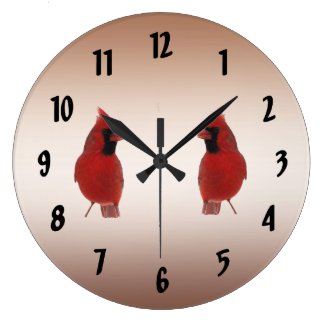
This wall clock features two brilliant red cardinals. These scarlet creatures are truly the kings of backyard birds! They are set off by a bronze metallic background. You can clear the numbers if a simpler design is preferred.
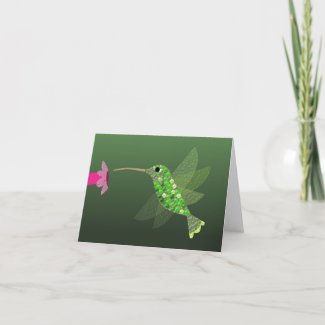
Beautiful hummingbird wth irridescent body is hovering at a pink flower. Vector design on blank notecard for bird lovers.
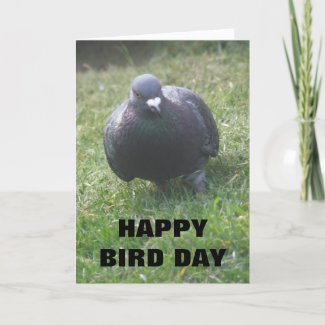
This Birthday card features a photograph of a wild Pigeon taken in my back garden. The bird was pecking about in the grass looking for seed that had been knocked off a bird feeder. The iridescence of the feathers is clearly visible in the photo. The bold, black text on the front of the card says "Happy Bird Day" and inside there is a greeting that reads "A little bird told me it's your Birthday. This text is customizable to allow you to change the greeting should you wish to. The same photograph is also available on a postage stamp.
Beautiful hummingbird wth irridescent body is hovering at a pink flower. Vector design on blank notecard for bird lovers.
This Birthday card features a photograph of a wild Pigeon taken in my back garden. The bird was pecking about in the grass looking for seed that had been knocked off a bird feeder. The iridescence of the feathers is clearly visible in the photo. The bold, black text on the front of the card says "Happy Bird Day" and inside there is a greeting that reads "A little bird told me it's your Birthday. This text is customizable to allow you to change the greeting should you wish to. The same photograph is also available on a postage stamp.
Sunday, June 24, 2012
This Bagettes wristlet features two adorable African Penguins standing on a rocky ledge. They are aquatic, flightless birds whose wings have become flippers. Each has a black stripe and black spots on the chest. The pattern of spots is unique for every penguin, just like human fingerprints. They have pink glands above their eyes and pink and black feet.
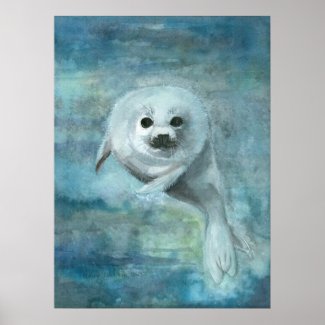
This lovely watercolor poster features a harp seal and is entitled "Arctic Swimmer" © Molly Harrison 2012
Hilarious pink flamingo bird playing the harp cartoon design is unique and fun and a great gift idea. He's full of personality. Can also add custom text when ordering.

This lovely watercolor poster features a harp seal and is entitled "Arctic Swimmer" © Molly Harrison 2012
Hilarious pink flamingo bird playing the harp cartoon design is unique and fun and a great gift idea. He's full of personality. Can also add custom text when ordering.

Saturday, June 23, 2012
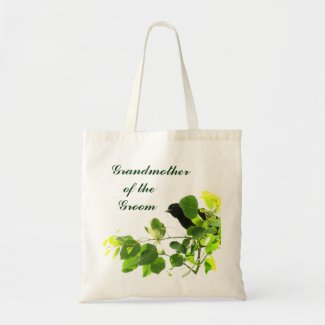
A red-winged blackbird on a branch way up in an aspen tree is the theme of this cheerful Grandmother of the Groom tote bag. He is peeking out from behind the golden green leaves. The sky has a very pale yellow tinge. All text can be customized for your special occasion. CLICK HERE TO SEE THE ENTIRE
BLACKBIRD WEDDING COLLECTION
Cute farm and zoo animals snack or dinner plate you can personalize just for your little precious! Horse, cow, goat, zebra, giraffe, pig, bear and lion running around in grass on a pink background.
This sweet poster features Cat Dreams with textured painted clouds.
Cute farm and zoo animals snack or dinner plate you can personalize just for your little precious! Horse, cow, goat, zebra, giraffe, pig, bear and lion running around in grass on a pink background.

This sweet poster features Cat Dreams with textured painted clouds.

This lovely artistic Case-Mate iPhone case features one of the world's most beautiful birds, the Northern Cardinal. Here he is with his brilliant red plumage perched on a branch of a flowering apple tree. The pink and white flowers are the perfect background to set off the scarlet feathers of this gorgeous bird! CLICK CUSTOMIZE to choose your option: Barely There, ID/Credit Card or Tough.
This t-shirt features a beautiful Pomeranian looking up at the sky.
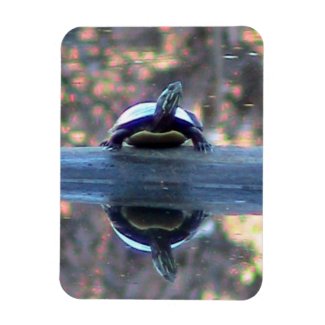
Here's a reflected turtle, original photo preserved on a sturdy flexible magnet to display at home, the office, on the fridge.

This t-shirt features a beautiful Pomeranian looking up at the sky.

Here's a reflected turtle, original photo preserved on a sturdy flexible magnet to display at home, the office, on the fridge.
Friday, June 22, 2012
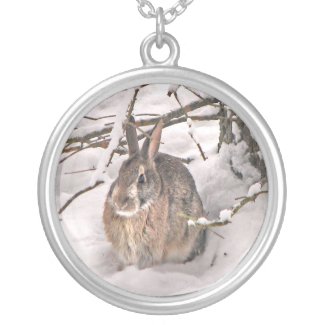
This necklace features a typical winter scene: a sweet brown cottontail bunny rabbit with big ears is huddled under a pine tree seeking shelter from the snow.
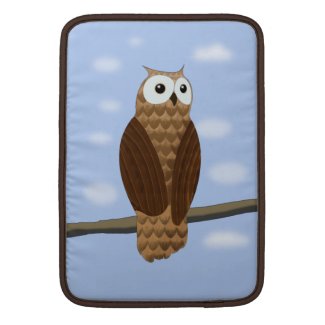
This Macbook Air 13" Sleeve features a cute brown cartoon owl. The owl stands on a branch against a powder blue sky with a few fleecy white clouds. The placeholder text allows you to personalize with your name or initials.
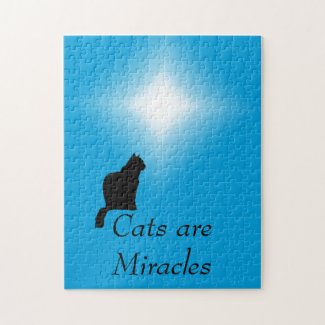
Background of light blue with "star"/pastel rainbow diamond, highlights the miracle of our feline friends. Text reads "Cats are Miracles" and one/two cats are the focal point of the design.
This Macbook Air 13" Sleeve features a cute brown cartoon owl. The owl stands on a branch against a powder blue sky with a few fleecy white clouds. The placeholder text allows you to personalize with your name or initials.
Background of light blue with "star"/pastel rainbow diamond, highlights the miracle of our feline friends. Text reads "Cats are Miracles" and one/two cats are the focal point of the design.
Thursday, June 21, 2012
This laptop skin features the Great Blue Heron, a large wading bird in the heron family Ardeidae, common near the shores of open water and in wetlands. He is the largest North American heron. Notable features include slaty flight feathers, red-brown thighs, and a paired red-brown and black stripe up the flanks; the neck is rusty-gray, with black and white streaking down the front; the head is paler, with a nearly white face, and a pair of black plumes running from just above the eye to the back of the head. The feathers on the lower neck are long and plume-like. Because this is the breeding season, he also has plumes on the lower back and an orange bill. He is standing in shallow water and his feathers are backlit by the luminous sunlight. Fit this skin to your computer by choosing from the options on the right.
Perhaps this Panda in the Beijing Zoo didn't want his picture taken or maybe he just liked making raspberries.
A cartoon drawing of an orange tabby cat showing it's angelic side and it's evil side on a background of pink gingham. Shown here on a blank greeting card for you to personalize.

Perhaps this Panda in the Beijing Zoo didn't want his picture taken or maybe he just liked making raspberries.

A cartoon drawing of an orange tabby cat showing it's angelic side and it's evil side on a background of pink gingham. Shown here on a blank greeting card for you to personalize.

Wednesday, June 20, 2012
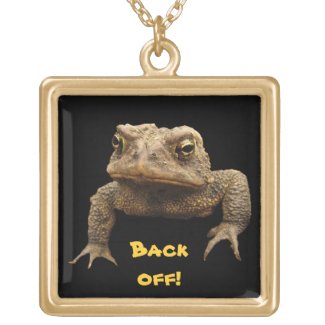
A grumpy looking American Toad (Bufo americanus) is looking out at you from this necklace. This small amphibian is brown with black, gold olive green and orange coloration. His warts distinguish him from his frog neighbors. Although hatched in the water of ponds, rivers, lakes or streams, the tadpoles soon move to land where the toads live their adult lives. His startling call is a long screech. He looks quite fierce but is actually a gentle little guy who eat lots of garden pests including insects and slugs. The text reads: Back off. It can be customized or removed.
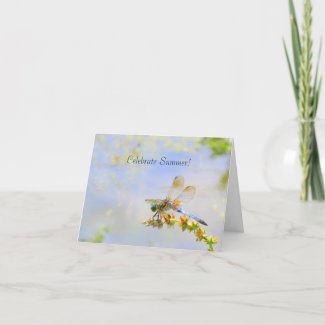
A stylized photo of a bright blue Dragonfly, resting over a pond reflecting the bright sky above. Available in 2 sizes with "Celebrate Summer!" in deep blue green on the front and "Happy Solstice" on the inside. This card is a template, so you can change the text or remove it by typing into or clearing the boxes under "personalize it".
Colorful Strutting Roosters "Good Morning" Coffee Mug, with customizable text.
A stylized photo of a bright blue Dragonfly, resting over a pond reflecting the bright sky above. Available in 2 sizes with "Celebrate Summer!" in deep blue green on the front and "Happy Solstice" on the inside. This card is a template, so you can change the text or remove it by typing into or clearing the boxes under "personalize it".
Colorful Strutting Roosters "Good Morning" Coffee Mug, with customizable text.

Tuesday, June 19, 2012
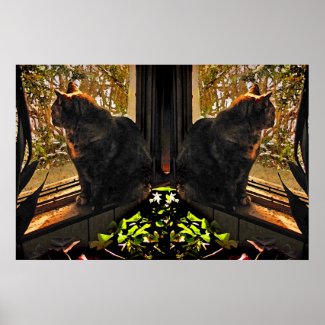
This poster features two beautiful golden, orange and brown tortie cats staring out a corner window into a sunny yard. Green plants and white flowers are on the table in front.
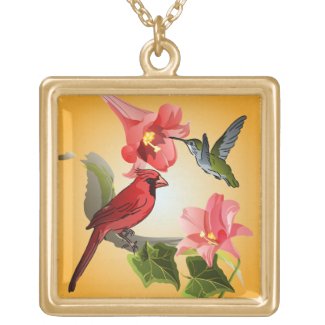
This necklace is embellished with an illustration featuring a bright red cardinal perched upon a translucent bough with green ivy leaves and a hummingbird hovering near a pink lily blossom all set against an orange and light blue gradient soft background.
Pitbull in silhouette with the text "big jaw + big heart = Pitblull. The back features a paw print with the words "adopt". All text is editable. Choose your own font style, color, and size. Images can be enlarged or reduced to suit your design. Paw print image and text on the back can also be edited, or delete if one-sided shirt is desired.
This necklace is embellished with an illustration featuring a bright red cardinal perched upon a translucent bough with green ivy leaves and a hummingbird hovering near a pink lily blossom all set against an orange and light blue gradient soft background.
Pitbull in silhouette with the text "big jaw + big heart = Pitblull. The back features a paw print with the words "adopt". All text is editable. Choose your own font style, color, and size. Images can be enlarged or reduced to suit your design. Paw print image and text on the back can also be edited, or delete if one-sided shirt is desired.

Monday, June 18, 2012
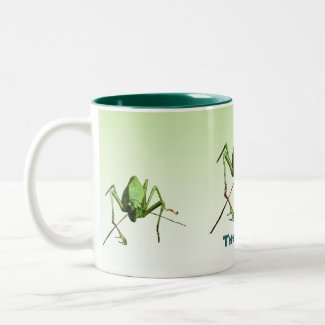
This mug features a lively katydid. Katydids are medium-sized to large insects. They are usually green, sometimes with brown markings, and are camouflaged to blend with the leaves they feed on. Their very long antennae distinguish them from grasshoppers. Seen up close, they seem to be aliens from outer space! The image is repeated on the left, center and right sides. The text reads: Think Green! It can be customized or removed.
This is a beautiful necklace with a print of a painting of a hummingbird. The hummingbird is drinking from a gorgeous pink flower!
A baby bunny rabbit, in a nice blue color. The cute rabbit picture printed on this shirt was originally created with paint and ink.
This is a beautiful necklace with a print of a painting of a hummingbird. The hummingbird is drinking from a gorgeous pink flower!

A baby bunny rabbit, in a nice blue color. The cute rabbit picture printed on this shirt was originally created with paint and ink.

Sunday, June 17, 2012
This iPad sleeve features a cute little chipmunk stuffing his cheeks as fast as he can on a snowy day. The image is repeated on the back and front.
This iPad case presents a coffee brown llama watching the photographer for possible treats.
This mousepad features the portrait of an adorable orange tabby kitten with soulful blue eyes set against a vivid blue gradient background.

This iPad case presents a coffee brown llama watching the photographer for possible treats.

This mousepad features the portrait of an adorable orange tabby kitten with soulful blue eyes set against a vivid blue gradient background.

Subscribe to:
Posts (Atom)