|
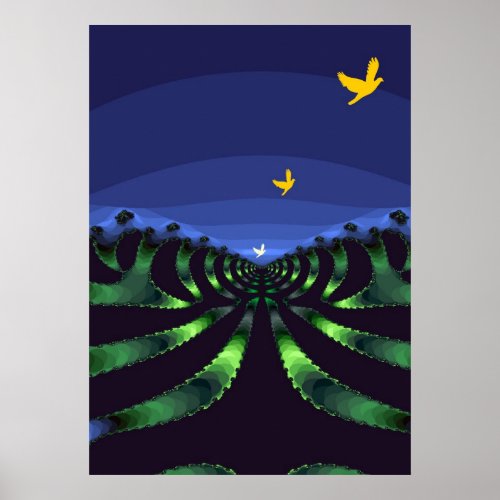
Out of the Void Poster by Bebops
I hope to display a variety of animal images on this blog to delight us all. I have created many products featuring wildlife and pets for my Zazzle stores, Bebop's Place and Bebop's Weddings, using my original photographs and designs. I am also constantly amazed at the gorgeous animal products available from the rest of the Zazzle community. I am hoping others will enjoy this blog and even be moved to purchase some of these lovely items for gifts or just for the pleasure of having such beauty around.
Monday, June 9, 2014
Zazzle Calendar from Bebops: Northeastern Birds 2015 Calendar










Name, Flame Nebula in Orion, intriguing deep space Gift Wrap
A gorgeous something for Valentine's day to express your love and featuring a cute animal. Click to see, personalize and buy.
tagged with: star forming, orion constellation, young stars clusters, orions belt, orion the hunter, flame nebula, astronomy pictures, deep space image, star galaxies, hrbstslr hfflmnb, heavens, european southern observatory, eso, vista
Galaxies, Stars and Nebulae series A gorgeous outer space picture featuring the spectacular star-forming region known as the Flame Nebula, or NGC 2024, in the constellation of Orion (the Hunter) and its surroundings.
In views of this evocative object in visible light the core of the nebula is completely hidden behind obscuring dust, but in this VISTA view, taken in infrared light, the cluster of very young stars at the object’s heart is revealed. The wide-field VISTA view also includes the glow of the reflection nebula NGC 2023, just below centre, and the ghostly outline of the Horsehead Nebula (Barnard 33) towards the lower right.
The bright bluish star towards the right is one of the three bright stars forming the Belt of Orion. The image was created from VISTA images taken through J, H and Ks filters in the near-infrared part of the spectrum.
more items with this image
more items in the Galaxies, Stars and Nebulae series
image code: hfflmnb
ESO/J. Emerson/VISTA www.eso.org
Reproduced under the Creative Commons Attribution 3.0 Unported license.
»visit the HightonRidley store for more designs and products like this
The Zazzle guarantee: We promise 100% satisfaction. If you don't absolutely love it, we'll take it back!

tagged with: star forming, orion constellation, young stars clusters, orions belt, orion the hunter, flame nebula, astronomy pictures, deep space image, star galaxies, hrbstslr hfflmnb, heavens, european southern observatory, eso, vista
Galaxies, Stars and Nebulae series A gorgeous outer space picture featuring the spectacular star-forming region known as the Flame Nebula, or NGC 2024, in the constellation of Orion (the Hunter) and its surroundings.
In views of this evocative object in visible light the core of the nebula is completely hidden behind obscuring dust, but in this VISTA view, taken in infrared light, the cluster of very young stars at the object’s heart is revealed. The wide-field VISTA view also includes the glow of the reflection nebula NGC 2023, just below centre, and the ghostly outline of the Horsehead Nebula (Barnard 33) towards the lower right.
The bright bluish star towards the right is one of the three bright stars forming the Belt of Orion. The image was created from VISTA images taken through J, H and Ks filters in the near-infrared part of the spectrum.
more items with this image
more items in the Galaxies, Stars and Nebulae series
image code: hfflmnb
ESO/J. Emerson/VISTA www.eso.org
Reproduced under the Creative Commons Attribution 3.0 Unported license.
»visit the HightonRidley store for more designs and products like this
The Zazzle guarantee: We promise 100% satisfaction. If you don't absolutely love it, we'll take it back!
Sunday, June 8, 2014
Zazzle Calendar from Bebops: Eastern Wildlife 2015 Calendar
|

Saturday, June 7, 2014
Name, Cats Eye Nebula, Eye of God outer space Gift Wrap Paper
A gorgeous something for Valentine's day to express your love and featuring a cute animal. Click to see, personalize and buy.
tagged with: nebulae, hubble chandra images, cats eye nebula, dying star, red giant evolution, outer space, galaxy stars, tcenebnch, deep space astronomy, eye of god, stellar evolution, nasa
Galaxies, Stars and Nebulae series A gorgeous design featuring a composite image of the Cat's Eye nebula from NASA's Chandra X-ray Observatory and the Hubble Space Telescope.
This famous nebula represents a phase of stellar evolution after a star like our Sun runs out of fuel. In this phase, a star becomes an expanding red giant and sheds some of its outer layers, eventually leaving behind a hot core that collapses to form a dense white dwarf star. A fast wind emanating from the hot core rams into the ejected atmosphere, pushes it outward, and creates the graceful filamentary structures.
more items with this image
more items in the Galaxies, Stars and Nebulae series
image code: tcenebnch
Image credit: NASA/Chandra www.nasa.gov
»visit the HightonRidley store for more designs and products like this
The Zazzle guarantee: We promise 100% satisfaction. If you don't absolutely love it, we'll take it back!

tagged with: nebulae, hubble chandra images, cats eye nebula, dying star, red giant evolution, outer space, galaxy stars, tcenebnch, deep space astronomy, eye of god, stellar evolution, nasa
Galaxies, Stars and Nebulae series A gorgeous design featuring a composite image of the Cat's Eye nebula from NASA's Chandra X-ray Observatory and the Hubble Space Telescope.
This famous nebula represents a phase of stellar evolution after a star like our Sun runs out of fuel. In this phase, a star becomes an expanding red giant and sheds some of its outer layers, eventually leaving behind a hot core that collapses to form a dense white dwarf star. A fast wind emanating from the hot core rams into the ejected atmosphere, pushes it outward, and creates the graceful filamentary structures.
more items with this image
more items in the Galaxies, Stars and Nebulae series
image code: tcenebnch
Image credit: NASA/Chandra www.nasa.gov
»visit the HightonRidley store for more designs and products like this
The Zazzle guarantee: We promise 100% satisfaction. If you don't absolutely love it, we'll take it back!
Zazzle Charm from Bebops: Cardinal in Snow
|

Friday, June 6, 2014
Zazzle Charm from Bebops: House Finches
|

Monogram Tarantula Nebula, outer space image Leather Wallet
A gorgeous something for Valentine's day to express your love and featuring a cute animal. Click to see, personalize and buy.
tagged with: astronomy, stellar nursery, 30 doradus nebula, massive stars, amazing hubble images, tarantula nebula, outer space, star galaxies, large magellanic cloud, hrbstslr dorneblmc, r136, star cluster
Galaxies, Stars and Nebulae series Hundreds of brilliant blue stars wreathed by warm, glowing clouds in appear in this the most detailed view of the largest stellar nursery in our local galactic neighborhood. The massive, young stellar grouping, called R136, is only a few million years old and resides in the 30 Doradus (or Tarantula) Nebula, a turbulent star-birth region in the Large Magellanic Cloud (LMC), a satellite galaxy of our Milky Way.
There is no known star-forming region in our galaxy as large or as prolific as 30 Doradus. Many of the diamond-like icy blue stars are among the most massive stars known. Several of them are over 100 times more massive than our Sun. These hefty stars are destined to pop off, like a string of firecrackers, as supernovas in a few million years. The image, taken in ultraviolet, visible, and red light by Hubble's Wide Field Camera 3, spans about 100 light-years.
The movement of the LMC around the Milky Way may have triggered the massive cluster's formation in several ways. The gravitational tug of the Milky Way and the companion Small Magellanic Cloud may have compressed gas in the LMC. Also, the pressure resulting from the LMC plowing through the Milky Way's halo may have compressed gas in the satellite. The cluster is a rare, nearby example of the many super star clusters that formed in the distant, early universe, when star birth and galaxy interactions were more frequent.
The LMC is located 170,000 light-years away and is a member of the Local Group of Galaxies, which also includes the Milky Way. The Hubble observations were taken Oct. 20-27, 2009. The blue color is light from the hottest, most massive stars; the green from the glow of oxygen; and the red from fluorescing hydrogen.
more items with this image
more items in the Galaxies, Stars and Nebulae series
image code: dorneblmc
Image credit: Hubble's Wide Field Camera 3
»visit the HightonRidley store for more designs and products like this
The Zazzle guarantee: We promise 100% satisfaction. If you don't absolutely love it, we'll take it back!

tagged with: astronomy, stellar nursery, 30 doradus nebula, massive stars, amazing hubble images, tarantula nebula, outer space, star galaxies, large magellanic cloud, hrbstslr dorneblmc, r136, star cluster
Galaxies, Stars and Nebulae series Hundreds of brilliant blue stars wreathed by warm, glowing clouds in appear in this the most detailed view of the largest stellar nursery in our local galactic neighborhood. The massive, young stellar grouping, called R136, is only a few million years old and resides in the 30 Doradus (or Tarantula) Nebula, a turbulent star-birth region in the Large Magellanic Cloud (LMC), a satellite galaxy of our Milky Way.
There is no known star-forming region in our galaxy as large or as prolific as 30 Doradus. Many of the diamond-like icy blue stars are among the most massive stars known. Several of them are over 100 times more massive than our Sun. These hefty stars are destined to pop off, like a string of firecrackers, as supernovas in a few million years. The image, taken in ultraviolet, visible, and red light by Hubble's Wide Field Camera 3, spans about 100 light-years.
The movement of the LMC around the Milky Way may have triggered the massive cluster's formation in several ways. The gravitational tug of the Milky Way and the companion Small Magellanic Cloud may have compressed gas in the LMC. Also, the pressure resulting from the LMC plowing through the Milky Way's halo may have compressed gas in the satellite. The cluster is a rare, nearby example of the many super star clusters that formed in the distant, early universe, when star birth and galaxy interactions were more frequent.
The LMC is located 170,000 light-years away and is a member of the Local Group of Galaxies, which also includes the Milky Way. The Hubble observations were taken Oct. 20-27, 2009. The blue color is light from the hottest, most massive stars; the green from the glow of oxygen; and the red from fluorescing hydrogen.
more items with this image
more items in the Galaxies, Stars and Nebulae series
image code: dorneblmc
Image credit: Hubble's Wide Field Camera 3
»visit the HightonRidley store for more designs and products like this
The Zazzle guarantee: We promise 100% satisfaction. If you don't absolutely love it, we'll take it back!
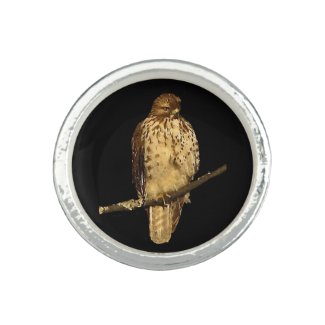
Zazzle Ring from Bebops: Red Tailed Hawk
|
Subscribe to:
Posts (Atom)