| About your Order Contact our support team! | Unsubscribe
|
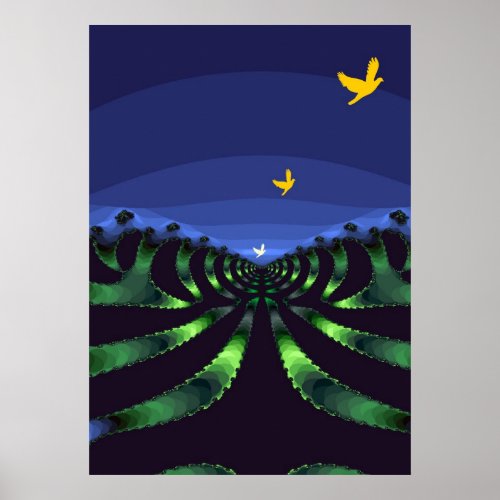
Out of the Void Poster by Bebops
I hope to display a variety of animal images on this blog to delight us all. I have created many products featuring wildlife and pets for my Zazzle stores, Bebop's Place and Bebop's Weddings, using my original photographs and designs. I am also constantly amazed at the gorgeous animal products available from the rest of the Zazzle community. I am hoping others will enjoy this blog and even be moved to purchase some of these lovely items for gifts or just for the pleasure of having such beauty around.
Monday, May 5, 2014
Zazzle Card from AugieDoggyStore: Golden Retriever Funny Father's Day ...













Zazzle Card from E.Williams Avalos at ZorroCreations: Caspian Happy Mi...
| About your Order Contact our support team! | Unsubscribe
|

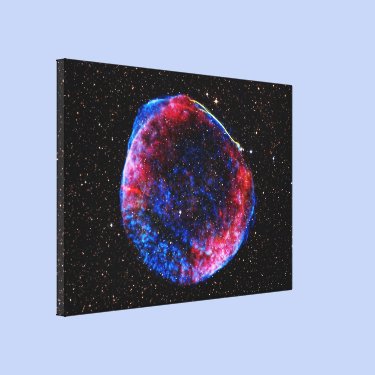
Brightest Supernova Ever space picture Canvas Print
A gorgeous something for Valentine's day to express your love and featuring a cute animal. Click to see, personalize and buy.
tagged with: astronomy pictures, outer space, star galaxies, sn1006c, supernova explosions, brightest supernova, exploding white dwarf, neutron star, deep space astronomy, hrbstslr wallart, supernova bursts, supernovae space bubble
Galaxies, Stars and Nebulae series Just over a thousand years ago, the stellar explosion known as supernova SN 1006 was observed. It was brighter than Venus, and visible during the day for weeks. The brightest supernova ever recorded on Earth, this spectacular light show was documented in China, Japan, Europe, and the Arab world.
Ancient observers were treated to this celestial fireworks display without understanding its cause or implications. Astronomers now understand that SN 1006 was caused by a white dwarf star that captured mass from a companion star until the white dwarf became unstable and exploded. Recent observations of the remnant of SN 1006 reveal the liberation of elements such as iron that were previously locked up inside the star. Because no material falls back into a neutron star or black hole after this type of supernova explosion, the liberation of this star's contents is complete. It represents, therefore, a cosmic version of Independence Day for this star.
This is a composite image of the SN 1006 supernova remnant, which is located about 7000 light years from Earth. Shown here are X-ray data from NASA's Chandra X-ray Observatory (blue), optical data from the University of Michigan's 0.9 meter Curtis Schmidt telescope at the NSF's Cerro Tololo Inter-American Observatory (CTIO; yellow) and the Digitized Sky Survey (orange and light blue), plus radio data from the NRAO's Very Large Array and Green Bank Telescope (VLA/GBT; red).
This combined study of the Chandra, CTIO and VLA/GBT observations shows new evidence for the acceleration of charged particles to high energies in supernova shockwaves. An accompanying Hubble Space Telescope image of SN 1006 shows a close-up of the region on the upper right of the supernova remnant. The twisting ribbon of light seen by Hubble reveals where the expanding blast wave is sweeping into very tenuous surrounding gas.
more items with this image
more items in the Galaxies, Stars and Nebulae series
image code: sn1006c
Image credit: X-ray: NASA/CXC/Rutgers/G.Cassam-Chenaï, J.Hughes et al.; Radio: NRAO/AUI/NSF/GBT/VLA/Dyer, Maddalena & Cornwell; Optical: Middlebury College/F.Winkler, NOAO/AURA/NSF/CTIO Schmidt & DSS
»visit the HightonRidley store for more designs and products like this
The Zazzle guarantee: We promise 100% satisfaction. If you don't absolutely love it, we'll take it back!
tagged with: astronomy pictures, outer space, star galaxies, sn1006c, supernova explosions, brightest supernova, exploding white dwarf, neutron star, deep space astronomy, hrbstslr wallart, supernova bursts, supernovae space bubble
Galaxies, Stars and Nebulae series Just over a thousand years ago, the stellar explosion known as supernova SN 1006 was observed. It was brighter than Venus, and visible during the day for weeks. The brightest supernova ever recorded on Earth, this spectacular light show was documented in China, Japan, Europe, and the Arab world.
Ancient observers were treated to this celestial fireworks display without understanding its cause or implications. Astronomers now understand that SN 1006 was caused by a white dwarf star that captured mass from a companion star until the white dwarf became unstable and exploded. Recent observations of the remnant of SN 1006 reveal the liberation of elements such as iron that were previously locked up inside the star. Because no material falls back into a neutron star or black hole after this type of supernova explosion, the liberation of this star's contents is complete. It represents, therefore, a cosmic version of Independence Day for this star.
This is a composite image of the SN 1006 supernova remnant, which is located about 7000 light years from Earth. Shown here are X-ray data from NASA's Chandra X-ray Observatory (blue), optical data from the University of Michigan's 0.9 meter Curtis Schmidt telescope at the NSF's Cerro Tololo Inter-American Observatory (CTIO; yellow) and the Digitized Sky Survey (orange and light blue), plus radio data from the NRAO's Very Large Array and Green Bank Telescope (VLA/GBT; red).
This combined study of the Chandra, CTIO and VLA/GBT observations shows new evidence for the acceleration of charged particles to high energies in supernova shockwaves. An accompanying Hubble Space Telescope image of SN 1006 shows a close-up of the region on the upper right of the supernova remnant. The twisting ribbon of light seen by Hubble reveals where the expanding blast wave is sweeping into very tenuous surrounding gas.
more items with this image
more items in the Galaxies, Stars and Nebulae series
image code: sn1006c
Image credit: X-ray: NASA/CXC/Rutgers/G.Cassam-Chenaï, J.Hughes et al.; Radio: NRAO/AUI/NSF/GBT/VLA/Dyer, Maddalena & Cornwell; Optical: Middlebury College/F.Winkler, NOAO/AURA/NSF/CTIO Schmidt & DSS
»visit the HightonRidley store for more designs and products like this
The Zazzle guarantee: We promise 100% satisfaction. If you don't absolutely love it, we'll take it back!
Saturday, May 3, 2014
Zazzle Postcard from Bebops: American Toad 2015 Calendar Postcard
| About your Order Contact our support team! | Unsubscribe
|

Friday, May 2, 2014
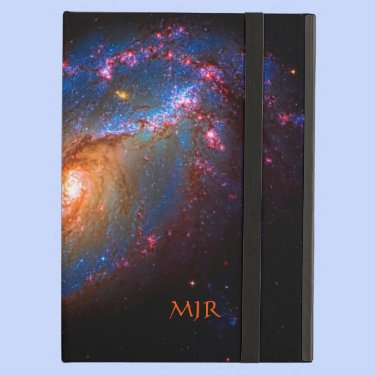
Monogram Barred Spiral Galaxy NGC 1672 iPad Folio Case
A gorgeous something for Valentine's day to express your love and featuring a cute animal. Click to see, personalize and buy.
tagged with: monogram initials, star galaxies, deep space astronomy, barred spiral galaxy, starry space picture, galactic arms, supermassive black hole, dust lanes, star forming galaxy, hrbstslr bsgsst
Galaxies, Stars and Nebulae series This NASA Hubble Space Telescope view of the nearby barred spiral galaxy NGC 1672 unveils details in the galaxy's star-forming clouds and dark bands of interstellar dust.
One of the most striking features is the dust lanes that extend away from the nucleus and follow the inner edges of the galaxy's spiral arms. Clusters of hot young blue stars form along the spiral arms and ionize surrounding clouds of hydrogen gas that glow red. Delicate curtains of dust partially obscure and redden the light of the stars behind them by scattering blue light.
Galaxies lying behind NGC 1672 give the illusion they are embedded in the foreground galaxy, even though they are really much farther away. They also appear reddened as they shine through NGC 1672's dust. A few bright foreground stars inside our own Milky Way Galaxy appear in the image as bright and diamond-like objects.
As a prototypical barred spiral galaxy, NGC 1672 differs from normal spiral galaxies, in that the arms do not twist all the way into the center. Instead, they are attached to the two ends of a straight bar of stars enclosing the nucleus. Viewed nearly face on, NGC 1672 shows intense star formation regions especially off in the ends of its central bar.
Astronomers believe that barred spirals have a unique mechanism that channels gas from the disk inward towards the nucleus. This allows the bar portion of the galaxy to serve as an area of new star generation.
NGC 1672 is also classified as a Seyfert galaxy. Seyferts are a subset of galaxies with active nuclei. The energy output of these nuclei can sometimes outshine their host galaxies. This activity is powered by accretion onto supermassive black holes.
NGC 1672 is more than 60 million light-years away in the direction of the southern constellation Dorado. These observations of NGC 1672 were taken with Hubble's Advanced Camera for Surveys in August of 2005. The composite image was made by using filters that isolate light from the blue, green, and infrared portions of the spectrum, as well as emission from ionized hydrogen.
more items with this image
more items in the Galaxies, Stars and Nebulae series
image code: bsgsst
Image credit: NASA, ESA, and The Hubble Heritage Team (STScI/AURA)-ESA/Hubble Collaboration
»visit the HightonRidley store for more designs and products like this
The Zazzle guarantee: We promise 100% satisfaction. If you don't absolutely love it, we'll take it back!
tagged with: monogram initials, star galaxies, deep space astronomy, barred spiral galaxy, starry space picture, galactic arms, supermassive black hole, dust lanes, star forming galaxy, hrbstslr bsgsst
Galaxies, Stars and Nebulae series This NASA Hubble Space Telescope view of the nearby barred spiral galaxy NGC 1672 unveils details in the galaxy's star-forming clouds and dark bands of interstellar dust.
One of the most striking features is the dust lanes that extend away from the nucleus and follow the inner edges of the galaxy's spiral arms. Clusters of hot young blue stars form along the spiral arms and ionize surrounding clouds of hydrogen gas that glow red. Delicate curtains of dust partially obscure and redden the light of the stars behind them by scattering blue light.
Galaxies lying behind NGC 1672 give the illusion they are embedded in the foreground galaxy, even though they are really much farther away. They also appear reddened as they shine through NGC 1672's dust. A few bright foreground stars inside our own Milky Way Galaxy appear in the image as bright and diamond-like objects.
As a prototypical barred spiral galaxy, NGC 1672 differs from normal spiral galaxies, in that the arms do not twist all the way into the center. Instead, they are attached to the two ends of a straight bar of stars enclosing the nucleus. Viewed nearly face on, NGC 1672 shows intense star formation regions especially off in the ends of its central bar.
Astronomers believe that barred spirals have a unique mechanism that channels gas from the disk inward towards the nucleus. This allows the bar portion of the galaxy to serve as an area of new star generation.
NGC 1672 is also classified as a Seyfert galaxy. Seyferts are a subset of galaxies with active nuclei. The energy output of these nuclei can sometimes outshine their host galaxies. This activity is powered by accretion onto supermassive black holes.
NGC 1672 is more than 60 million light-years away in the direction of the southern constellation Dorado. These observations of NGC 1672 were taken with Hubble's Advanced Camera for Surveys in August of 2005. The composite image was made by using filters that isolate light from the blue, green, and infrared portions of the spectrum, as well as emission from ionized hydrogen.
more items with this image
more items in the Galaxies, Stars and Nebulae series
image code: bsgsst
Image credit: NASA, ESA, and The Hubble Heritage Team (STScI/AURA)-ESA/Hubble Collaboration
»visit the HightonRidley store for more designs and products like this
The Zazzle guarantee: We promise 100% satisfaction. If you don't absolutely love it, we'll take it back!
Zazzle Postcard from Bebops: Cardinal 2015 Calendar
| About your Order Contact our support team! | Unsubscribe
|

Subscribe to:
Posts (Atom)